

A successful shopping mall starts long before the first block goes down. The shopping mall construction process demands careful planning, realistic budgets, suitable land, and coordination between architects, engineers, contractors, and future tenants. One missed detail can trigger costly delays, design changes, drainage problems, or parking shortages that frustrate shoppers and affect business performance. In Nigeria, developers must also account for site conditions, infrastructure, regulatory approvals, and changing construction costs. The World Bank’s Doing Business archive offers useful background on the regulatory steps involved in construction, though its historical rankings should not serve as current performance data.
Poor decisions at the early stages can create bigger problems later. A developer might choose a site with limited road access, underestimate utility needs, overlook fire-safety requirements, or approve a layout that leaves little room for future growth. These mistakes can strain the budget, delay opening day, and reduce the mall’s long-term value. Developers need a construction partner who understands how each decision affects the entire project.
At Dutum Construction Company, we recognise the importance of thoughtful planning and coordinated project delivery. This guide walks you through the key stages of the shopping mall construction process, from site selection and design to approvals, construction, inspections, and handover. You’ll learn what each stage requires, which challenges to anticipate, and how sound decisions can help keep your project on track.
What Does the Shopping Mall Construction Process Involve?
The shopping mall construction process covers the steps developers follow to turn a commercial property idea into a functioning retail destination. It begins with checking market demand, selecting a suitable site, and assessing project costs. The team then develops architectural and engineering designs, secures the required approvals, and plans the construction work.
Each decision must support the mall’s commercial needs. Shop sizes, customer walkways, parking, loading bays, drainage, power supply, ventilation, and fire safety all affect how well the finished property serves shoppers and tenants. Developers must also plan for future maintenance and tenant fit-outs rather than focus only on completing the building.
Careful coordination helps keep design, budget, construction quality, and project schedules aligned. At Dutum Construction Company, we recognise the importance of sound construction planning and informed project decisions in achieving practical, long-term results.
7 Key Stages in the Shopping Mall Construction Process
#1. Feasibility Study and Site Selection
Start by assessing whether the proposed mall can attract enough customers and support profitable businesses. Review the surrounding population, nearby competitors, road access, traffic flow, land conditions, parking capacity, and access to electricity and water.
A site with strong commercial potential can still create problems if poor drainage, limited access roads, or costly infrastructure upgrades increase development expenses. A feasibility study helps developers identify these risks before committing significant funds.
#2. Budget Planning and Project Cost Estimation
Prepare a realistic budget that covers construction materials, labour, professional fees, equipment, utilities, external works, approvals, and contingency allowances. Include the costs of roads, parking, drainage, and power infrastructure, which can account for substantial parts of a mall development.
Since material prices and transport costs can change in Nigeria, review estimates throughout the design process. Clear cost planning helps developers compare options and make informed decisions before approving major expenses.
#3. Architectural Design and Engineering Planning
Develop a design that supports both customer convenience and efficient retail operations. Architects and engineers should coordinate shop layouts, walkways, entrances, loading areas, structural elements, plumbing, electrical systems, ventilation, and fire-safety provisions.
The design should also consider accessibility, emergency exits, waste management, and future tenant requirements. Early coordination reduces the risk of conflicting systems, expensive design changes, and disruptions during construction.
#4. Regulatory Approvals and Site Preparation
Secure the required planning and building approvals before starting construction. Requirements depend on the project location, so developers should consult the relevant state planning and building control authorities.
For projects in Lagos, the Lagos State Physical Planning Permit Authority (LASPPPA) handles physical planning permits, while the Lagos State Building Control Agency (LASBCA) oversees building control and construction inspections. Developers must follow applicable requirements under the Lagos State Urban and Regional Planning and Development Law 2010 and relevant building regulations. Requirements in other states may differ.
Once the necessary permissions and authorisations have been secured, the project team can coordinate site surveys, soil investigations, clearing, levelling, temporary facilities, and other preparatory work.
#5. Structural Construction and Building Services
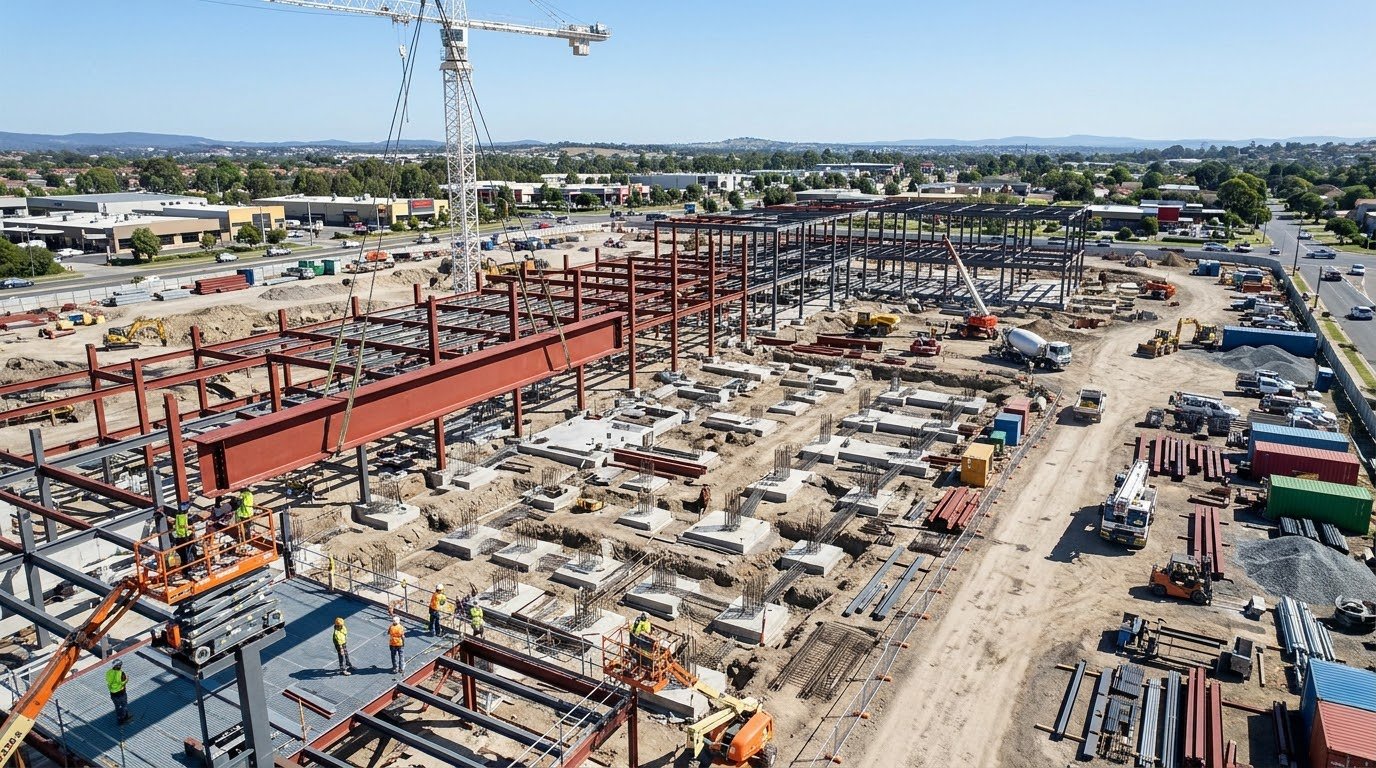
Construction typically progresses from foundations to the structural frame, floors, walls, and roof. The team then coordinates essential building services, including electrical installations, plumbing, drainage, ventilation, and fire protection.
Regular site inspections and communication between contractors help identify defects and resolve clashes before they affect later work. Developers should also monitor workmanship, material quality, safety, and progress against the construction programme.
#6. Interior Finishing, Parking, and External Works
After the main structure and essential services progress sufficiently, the team completes finishes and supporting facilities. Work may include shopfronts, flooring, ceilings, lighting, customer toilets, common areas, signage, and service spaces.
External works also matter. Access roads, parking bays, pedestrian routes, landscaping, stormwater drainage, and delivery areas help the mall function safely and efficiently. The team should coordinate these activities with tenant fit-outs to avoid damage, rework, and unnecessary delays.
#7. Inspections, Testing, and Handover
Before opening, the project team should inspect completed work, test building services, document defects, and arrange necessary corrections. Checks may cover electrical systems, water supply, drainage, ventilation, lifts, emergency lighting, and fire-safety equipment.
Developers should also organise the required final inspections and completion documentation with the relevant authorities. In Lagos, LASBCA provides guidance on final inspections and certificates following construction.
A structured handover should include relevant drawings, equipment manuals, warranties, maintenance information, and records of outstanding work. This helps the owner prepare the property for tenants and ongoing operations.
Common Challenges in Shopping Mall Construction Projects
Shopping mall developments involve many teams, systems, and commercial requirements. Without early planning and consistent coordination, small problems can affect the budget, schedule, and final quality.
Common challenges include:
- Rising material and labour costs: Price changes can push spending beyond the original budget. Regular estimate reviews and careful procurement planning help developers respond early.
- Approval delays: Incomplete submissions or design changes can slow regulatory reviews. Confirm requirements with the relevant authorities before scheduling major construction activities.
- Design changes and coordination issues: Conflicts between structural work, electrical systems, plumbing, and ventilation can lead to rework. Coordinated drawings and timely communication help resolve issues earlier.
- Poor site access and drainage: Heavy traffic, limited delivery space, flooding risks, or inadequate drainage can disrupt construction and future mall operations. Site investigations and practical access planning help address these concerns.
- Construction delays: Late material deliveries, subcontractor coordination problems, and unexpected site conditions can affect project milestones. A realistic construction programme and regular progress reviews help teams manage these risks.
How Dutum Construction Company Supports Successful Project Delivery
Successful construction requires careful planning, clear communication, quality control, and informed decisions at every stage. At Dutum Construction Company, we bring experience in commercial construction, including our work on Admiralty Mall in Lekki, Lagos. This project reflects our experience in delivering commercial developments and coordinating construction activities to meet project requirements. Our approach focuses on helping clients make practical decisions that support their project goals, budgets, and timelines.
Frequently Asked Questions
The timeline depends on the mall’s size, design complexity, site conditions, approval process, and construction resources. A smaller development may take around 12–18 months, while a large, multi-storey mall may require several years from planning to opening.
Key factors include land costs, building size, structural design, material and labour prices, power infrastructure, drainage, parking, finishes, and regulatory requirements. Exchange-rate changes and supply delays can also affect the final budget.
Developers generally need the applicable planning and building permits, alongside relevant environmental, fire-safety, and other technical approvals. Requirements vary by location, so consult the relevant state planning authority and building control agency before construction begins.
Assess the contractor’s relevant experience, technical capacity, financial stability, safety practices, quality controls, project management approach, references, and ability to meet the proposed budget and schedule. Clear contract terms and reporting arrangements also help protect the project.
Leave a Reply