

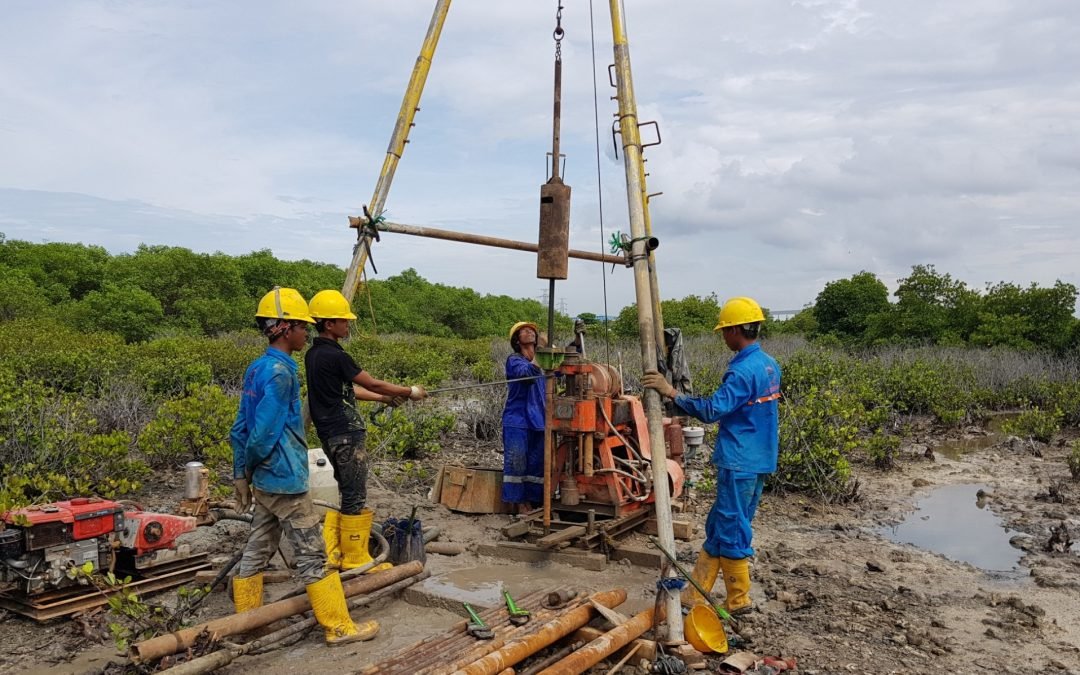
Construction projects often fail long before concrete is poured. Weak foundations, unexpected soil movement, and poor ground conditions continue to cause serious structural problems around the world. Studies published by the American Society of Civil Engineers show that inadequate site investigation is one of the leading causes of foundation failure and construction delays. That makes soil investigation for construction projects a critical first step before any building begins. Developers who skip proper geotechnical studies often face costly redesigns, cracked foundations, flooding risks, and project delays that can add millions to project costs. Construction in regions with varying soil conditions such as Nigeria makes proper investigation even more essential for safety and long-term durability.
Construction challenges often start beneath the surface. Many project owners discover unstable clay soils, groundwater issues, or hidden underground materials only after excavation begins. Such surprises lead to redesigns, delayed approvals, and disputes between engineers, contractors, and investors. Budget pressure increases quickly when piling systems must be redesigned or when foundation depths change unexpectedly. Safety risks also increase when soil conditions are not fully understood before construction begins. Complex projects such as hospitals, bridges, and commercial developments require accurate soil data to guide structural design and protect long-term performance.
This guide explains soil investigation for construction projects in practical, easy-to-understand steps. You will learn how soil testing works, why geotechnical studies matter, and what engineers look for before construction begins. Our team at Dutum Company Limited applies professional engineering expertise and site analysis to ensure construction projects start with the right foundation. Clear geotechnical insight helps transform uncertain ground conditions into reliable structures built for long-term performance across Nigeria.
You can also see: Engineering, Procurement, and Construction (EPC)
When Soil Investigation Should Be Conducted
Timing plays a major role in successful soil investigation for construction projects. Conducting soil tests at the right stage of a project helps engineers understand the ground conditions early and avoid structural risks, delays, and costly design changes.
Before Purchasing Land
Developers often conduct soil investigation before acquiring land for a major project. Early testing helps identify unstable soil, poor drainage, or contamination risks that could affect construction. Reliable soil data allows investors to make informed decisions and avoid properties that may require expensive soil improvement or deep foundations.
During Project Planning and Design
Soil investigation also takes place during the design stage of a construction project. Engineers rely on geotechnical data to determine the appropriate foundation system, drainage solutions, and structural load capacity. Accurate soil reports allow architects and structural engineers to develop safe and efficient building designs that match the ground conditions.
Before Foundation Construction
Another critical stage occurs before foundation excavation begins. Soil conditions must be confirmed to ensure they match the earlier investigation results. Many building authorities require verified geotechnical reports before issuing construction approvals. Construction activities in Nigeria must comply with professional engineering standards enforced by the Council for the Regulation of Engineering in Nigeria, which regulates engineering practice and ensures structural safety in infrastructure development.
Who Conducts Soil Investigation
Professional expertise is required to perform soil investigation for construction projects. Several specialists and institutions work together to collect soil data, analyze samples, and produce technical reports used for engineering decisions.
Role of Geotechnical Engineers
Geotechnical engineers lead the soil investigation process. Their responsibilities include planning the investigation program, supervising soil sampling activities, and analyzing soil behavior under structural loads. These engineers interpret the results to determine soil strength, settlement potential, and foundation suitability.
Role of Laboratories and Engineering Firms
Engineering laboratories conduct detailed soil testing using specialized equipment. Soil samples collected from the site are analyzed to determine important characteristics such as density, moisture content, particle distribution, and chemical composition. The results are then compiled into a geotechnical report that guides foundation design and site preparation.
Regulatory Requirements
Construction-related engineering activities in Nigeria operate under regulatory supervision. The Standards Organisation of Nigeria establishes national standards for construction materials and engineering quality. Local building control departments also review soil investigation reports before approving development permits. These regulations ensure that construction projects follow safe engineering practices and environmental standards.
Also See: How to Calculate Construction Materials
Steps Involved in Soil Investigation for Construction Projects
The process of soil investigation for construction projects follows a structured technical approach that allows engineers to understand the physical and mechanical properties of the soil.
1. Site Reconnaissance and Preliminary Survey
The investigation begins with a visual inspection of the construction site. Engineers assess the land surface, drainage patterns, vegetation conditions, and signs of soil instability. Early observations help determine where detailed testing should be performed.
2. Soil Sampling
Soil samples are collected from different locations and depths across the site to understand the soil layers beneath the surface.
Common sampling methods include:
- Borehole drilling to collect deep soil samples
- Trial pits to examine shallow soil layers
- Core sampling for detailed soil profile analysis
These methods help engineers identify soil types and structural characteristics beneath the foundation level.
3. Laboratory Soil Testing
Collected samples are transported to engineering laboratories where several tests are conducted to determine soil properties.
Common soil tests include:
- Moisture content analysis
- Soil density and compaction tests
- Particle size distribution analysis
- Chemical composition testing
These tests provide technical data needed to understand how the soil will behave under building loads.
Also See: 20 Ways to Manage Construction Change Order Effectively (with template)
4. Soil Data Analysis and Interpretation
Engineers evaluate laboratory results to determine the soil’s engineering performance.
Key factors assessed include:
- soil bearing strength
- compressibility and settlement behavior
- drainage and permeability characteristics
- suitability for various foundation systems
These findings help structural engineers design foundations that match the soil capacity.
5. Geotechnical Investigation Report
The final stage is the preparation of a detailed geotechnical report. This document serves as the technical guide for the entire construction project.
The report typically includes:
- soil profile and site conditions
- laboratory test results
- engineering recommendations
- foundation design guidance
- construction feasibility assessment
Experienced construction firms such as us at Dutum Company Limited rely on comprehensive geotechnical reports to ensure infrastructure projects are designed and built on stable ground conditions. Proper soil investigation helps engineers minimize structural risks and deliver long-lasting construction projects.
Common Soil Tests Used in Construction
Various tests help engineers evaluate soil behavior and suitability for supporting structures. Each test provides critical data used in foundation design and site planning.
| Test | Purpose | Key Notes |
| Moisture Content Test | Measures water content in soil | High moisture can reduce soil strength and affect stability. |
| Specific Gravity Test | Determines density of soil particles relative to water | Helps classify soil types and estimate compaction requirements. |
| Atterberg Limits Test | Evaluates soil plasticity | Shows how soil expands or shrinks with moisture changes; important for clayey soils. |
| Proctor Compaction Test | Determines optimum moisture for maximum compaction | Ensures soil can support structural loads without excessive settlement. |
| Shear Strength Test | Measures soil resistance to sliding or structural loads | Common methods: vane shear test, triaxial test, direct shear test. |
Environmental Site Assessment in Soil Investigation
Environmental evaluation is an important part of soil investigation for construction projects, ensuring that the site is safe for development and compliant with environmental laws.
Phase I Environmental Site Assessment
A preliminary study identifies potential environmental hazards such as:
- Soil contamination from chemicals or hydrocarbons
- Hazardous waste presence
- Flooding or erosion risks
This stage involves reviewing historical land use, regulatory records, and site inspections.
Phase II Environmental Site Assessment
If risks are found in Phase I, Phase II involves detailed testing to quantify contamination levels. Tests include:
- Soil chemical analysis
- Groundwater sampling
- Assessment of pollutant mobility
Environmental compliance is enforced under Nigerian environmental laws such as the National Environmental Standards and Regulations Enforcement Agency. Proper assessment ensures safe land use and prevents costly remediation during construction.
Site Preparation After Soil Investigation
After completing soil investigation for construction projects, the construction site is prepared to ensure stability and foundation safety.
1. Clearing and Excavation
Unsuitable soil, debris, or organic materials are removed. This step prevents weak layers from affecting foundation performance.
2. Soil Stabilization
Soil properties are improved to increase strength and reduce settlement risks. Common stabilizers include:
- Lime
- Cement
- Chemical additives
3. Subgrade Preparation
The site is leveled and strengthened to create a uniform base for foundations. Engineers ensure proper grading for drainage and load distribution.
4. Soil Compaction
Heavy machinery such as rollers and compactors increase soil density. Well-compacted soil supports foundation loads and minimizes future settlement.
Also See: Site Preparation Before Construction: Everything You Need to Know
Solutions When Soil Problems Are Found
Unsuitable soil can affect building safety and long-term stability. Engineers use several solutions to address soil issues discovered during soil investigation:
| Problem | Solution | Notes |
| Weak or loose soil | Soil replacement | Excavating poor soil and replacing it with compacted fill or engineered soil. |
| Low soil strength | Soil reinforcement | Using geotextiles, geogrids, or stone columns to increase load-bearing capacity. |
| Deep soft layers | Deep foundations or piling | Installing piles or piers to transfer loads to stronger soil or bedrock. |
| Expansive or unstable soil | Soil stabilization | Adding lime, cement, or chemical stabilizers to reduce shrink-swell behavior. |
| Contaminated soil | Environmental remediation | Cleaning or isolating hazardous materials to meet regulatory standards, e.g., National Environmental Standards and Regulations Enforcement Agency. |
Risks of Skipping Soil Investigation for Construction Projects
Neglecting soil investigation for construction projects can lead to severe consequences, affecting safety, costs, and timelines:
- Foundation failure: Buildings may crack, tilt, or collapse due to unsupported soil.
- Structural settlement: Uneven sinking can damage walls, floors, and utilities.
- Drainage problems: Poorly understood soil can lead to waterlogging and flooding.
- Project delays: Unexpected soil issues require emergency fixes, slowing construction.
- Increased construction cost: Remediation or redesign at advanced stages is expensive.
Regulatory oversight by Council for the Regulation of Engineering in Nigeria ensures engineers perform proper soil investigations to prevent these risks. Following the law protects developers, contractors, and occupants while ensuring structural safety and project success.
Frequently Asked Questions About Soil Investigation for Construction Projects
Soil investigation is the process of examining soil on a construction site to understand its properties, strength, and suitability for supporting buildings or infrastructure. It helps engineers design safe foundations and avoid future structural problems.
Early soil investigation can reduce overall cost by preventing structural failures and expensive redesigns. Ignoring soil testing often results in higher remediation expenses later.
Time depends on site size and complexity. Small residential plots may take 1–2 weeks, while larger commercial or industrial sites can take several weeks.
Yes. Professional companies like Dutum Company Limited provide full soil investigation services, including testing, analysis, and recommendations for foundation design.
Leave a Reply