

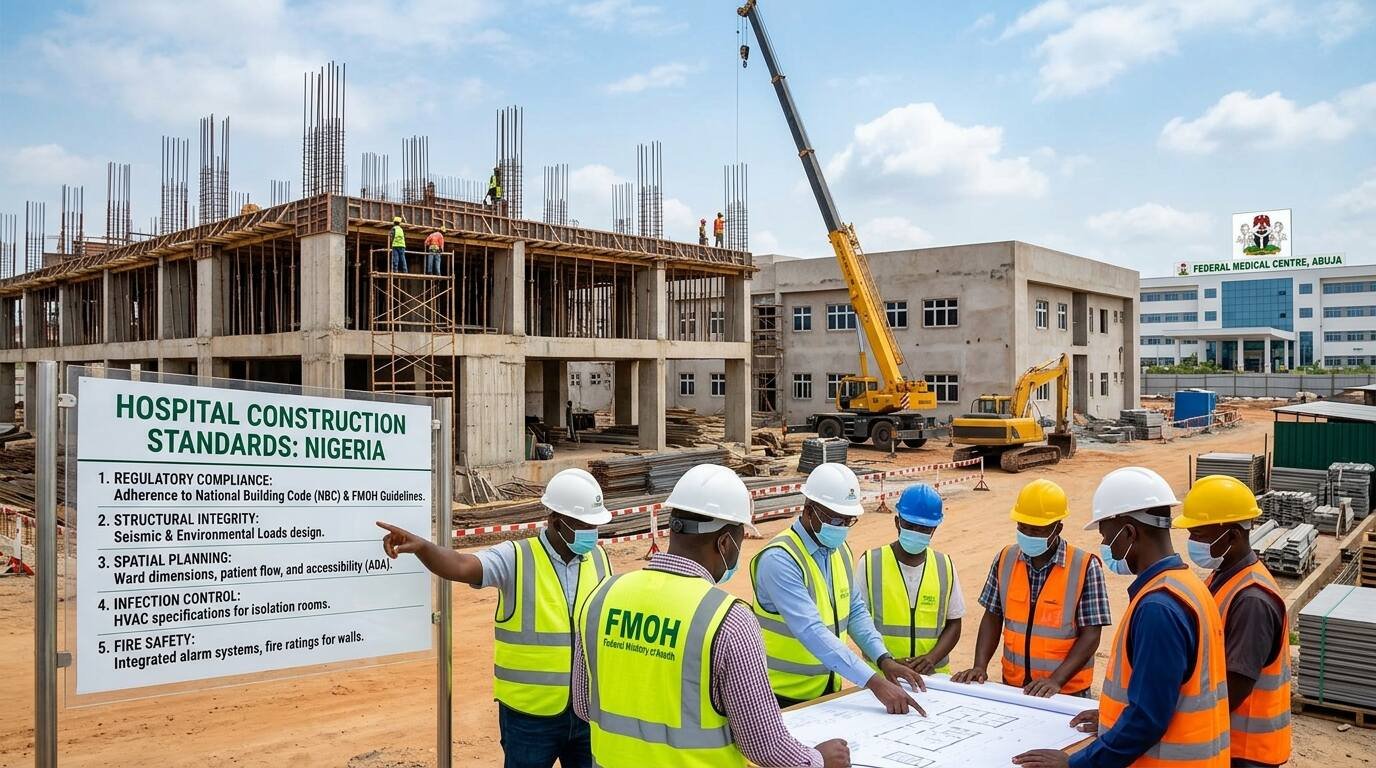
Healthcare facilities are among the most complex buildings to design and construct, which is why understanding hospital construction standards in Nigeria is essential for developers, healthcare providers, and government agencies. According to the World Health Organization (WHO), healthcare infrastructure plays a direct role in patient safety, infection prevention, and the overall quality of healthcare delivery. Poor hospital design can contribute to overcrowding, inefficient patient flow, infection risks, safety concerns, and higher operational costs. Challenges such as inadequate ventilation systems, non-compliance with healthcare regulations, poor emergency access, and outdated building layouts continue to affect healthcare facilities in many developing regions. Strong hospital construction standards, therefore, serve as the foundation for creating safe, functional, and sustainable healthcare environments.
Building a hospital requires far more than constructing walls and installing medical equipment. Project owners and healthcare investors often face critical questions such as:
- What are the approved hospital construction standards in Nigeria?
- Which regulations govern healthcare facility design and construction?
- How should patient wards, operating theatres, laboratories, and emergency units be planned?
- What fire safety, ventilation, and infection control systems are required?
- How can hospital projects meet both current healthcare needs and future expansion demands?
Finding the right answers can determine whether a healthcare facility operates efficiently for decades or struggles with costly upgrades and compliance issues shortly after completion.
This guide explains the key hospital construction standards Nigerian stakeholders should understand, including planning requirements, building regulations, safety systems, healthcare infrastructure design principles, and compliance considerations. You will also discover how Dutum Group leverages engineering expertise, project management excellence, and modern construction practices to deliver high-quality healthcare facilities that support patient safety, operational efficiency, and long-term infrastructure sustainability across Nigeria.
Also See: Construction Execution Strategy in Nigeria
Regulatory Framework Governing Hospital Construction in Nigeria
Hospital projects are subject to stricter regulations than many other building types because they directly affect public health, patient safety, and emergency care delivery. Understanding the regulatory framework is essential for meeting the hospital construction standards Nigeria requires.
#1. National Building Code Requirements
The National Building Code provides the foundation for building design, construction quality, structural safety, accessibility, fire protection, and occupancy requirements in Nigeria.
For healthcare facilities, compliance helps ensure that hospitals are safe, durable, and capable of supporting critical medical operations.
#2. Federal Ministry of Health Guidelines
The Federal Ministry of Health provides policies and healthcare facility requirements that influence hospital planning and development.
These guidelines help ensure that healthcare facilities provide:
- Safe patient environments
- Functional clinical spaces
- Effective infection control measures
- Appropriate healthcare service delivery
Hospital developers should align their projects with these healthcare-specific requirements from the early planning stage.
Also See: Warehouse Construction Requirements and Standards
#3. Environmental Impact Assessment (EIA) Requirements
Large healthcare developments may require an Environmental Impact Assessment (EIA) before construction begins.
An EIA evaluates how the proposed hospital could affect:
- Surrounding communities
- Water resources
- Waste management systems
- Air quality
- Local ecosystems
Approval is typically required before major construction activities can proceed.
#4. Planning Approvals and Regulatory Permits
Hospital projects must obtain approvals from relevant planning authorities before construction starts.
Typical approvals may include:
- Development permits
- Building plan approvals
- Environmental approvals
- Utility connection permits
- Fire safety approvals
Early engagement with regulators helps reduce delays and supports smoother project execution. Dutum Group’s experience in large-scale infrastructure and healthcare projects helps clients navigate these approval processes efficiently.
Core Hospital Construction Standards Nigeria Developers Must Meet
Meeting hospital construction standards in Nigeria requires going beyond constructing a functional building. Healthcare facilities must support patient care, operational efficiency, and long-term safety.
#1. Site Selection and Healthcare Facility Planning
Hospital sites should provide good accessibility for patients, staff, emergency vehicles, and support services.
Key considerations include:
- Road connectivity
- Utility availability
- Adequate land area
- Future expansion potential
- Environmental suitability
Careful planning helps ensure uninterrupted healthcare operations.
#2. Space Planning and Functional Department Layouts
Hospitals require specialised layouts that support efficient patient movement and medical workflows.
Important areas typically include:
| Department | Purpose |
| Emergency Unit | Immediate patient care |
| Operating Theatres | Surgical procedures |
| Intensive Care Units | Critical patient management |
| Laboratories | Diagnostic testing |
| Inpatient Wards | Patient accommodation |
Effective layouts improve patient experience while supporting healthcare staff efficiency.
#3. Accessibility and Universal Design Requirements
Healthcare facilities should be accessible to all users, including elderly patients and persons with disabilities.
Common accessibility features include:
- Ramps and lifts
- Accessible toilets
- Wide corridors and doorways
- Clear wayfinding systems
- Wheelchair-friendly circulation routes
These features support inclusive healthcare delivery.
#4. Structural Safety and Building Performance Standards
Hospitals operate continuously and must remain functional even during demanding conditions.
Structural design should account for:
- Equipment loads
- High occupancy levels
- Emergency operations
- Long-term durability
- Environmental conditions
Engineering teams must ensure that the facility can safely support specialised healthcare equipment and critical services throughout its lifespan.
Critical Building Systems Required in Modern Hospitals
Modern hospitals depend on specialised building systems that support patient care, infection prevention, safety, and operational continuity.
#1. Medical Gas Systems and Healthcare Infrastructure
Medical gases are essential in healthcare facilities and support many life-saving treatments.
Common medical gas systems include:
- Oxygen supply systems
- Medical air systems
- Vacuum systems
- Nitrous oxide systems
These systems must be carefully designed, installed, and maintained to ensure reliability and patient safety.
#2. Ventilation and Infection Control Systems
Air quality plays a major role in hospital safety.
Ventilation systems help:
- Reduce airborne contaminants
- Control temperature and humidity
- Support infection prevention measures
- Protect sensitive clinical environments
Critical areas such as operating theatres and isolation rooms often require specialised ventilation systems.
#3. Water Supply and Sanitation Requirements
Hospitals require a reliable supply of clean water for medical services, sanitation, cleaning, and patient care.
Water infrastructure should support:
- Continuous water availability
- Safe wastewater disposal
- Infection prevention measures
- Emergency operational requirements
Proper sanitation systems help maintain healthcare quality and public health standards.
#4. Backup Power and Electrical Reliability
Reliable electricity is essential for healthcare facilities.
Hospitals often depend on backup systems to ensure the uninterrupted operation of:
- Life-support equipment
- Operating theatres
- Diagnostic equipment
- Lighting systems
- Data and communication networks
Given power supply challenges in some locations, backup generators and redundant power systems are particularly important in Nigerian healthcare facilities.
#5. Fire Safety and Emergency Response Systems
Hospitals require advanced fire protection systems because many occupants may not be able to evacuate independently.
Essential fire safety measures include:
- Fire detection systems
- Fire alarms
- Automatic sprinkler systems
- Emergency exits
- Emergency lighting
- Fire-resistant building materials
Fire protection systems should comply with recognised standards such as those developed by the National Fire Protection Association (NFPA).
Patient Safety and Healthcare Design Standards
Patient safety is one of the most important aspects of hospital construction standards Nigeria requires. Hospital buildings must be designed to reduce risks, support quality healthcare delivery, and create safe environments for patients, visitors, and medical staff.
#1. Infection Prevention and Control Measures
Healthcare facilities must be designed to minimise the spread of infections.
Important measures include:
- Proper ventilation systems
- Isolation rooms for infectious patients
- Easy-to-clean surfaces and materials
- Safe waste handling areas
- Hand hygiene facilities
The World Health Organization (WHO) recommends healthcare facility designs that support infection prevention and control throughout hospital operations.
#2. Emergency Department and Critical Care Design
Emergency departments, operating theatres, and intensive care units require specialised design standards.
These areas should provide:
- Rapid access for emergency patients
- Efficient movement of medical personnel
- Space for specialised equipment
- Reliable utility and support systems
Careful planning helps improve response times and patient outcomes during critical situations.
#3. Patient Flow and Operational Efficiency
Hospital layouts should support smooth movement throughout the facility.
Good patient flow design helps:
- Reduce waiting times
- Minimise congestion
- Improve service delivery
- Enhance patient experience
Clear separation between clinical, administrative, and support functions also contributes to more efficient healthcare operations.
#4. Healthcare Worker Safety Considerations
Hospitals should protect healthcare professionals from workplace hazards while allowing them to perform their duties effectively.
Key considerations include:
- Safe workspaces
- Adequate lighting
- Ergonomic design features
- Emergency response systems
- Infection control measures
A safe working environment contributes to better healthcare delivery and staff wellbeing.
Sustainability and Environmental Standards for Hospitals
Modern healthcare facilities are increasingly designed to improve environmental performance while maintaining high standards of patient care.
Energy-Efficient Building Design
Hospitals operate around the clock and consume significant amounts of energy.
Energy-efficient features may include:
- High-performance building envelopes
- LED lighting systems
- Efficient HVAC systems
- Solar energy integration
- Smart building controls
These measures can reduce operating costs and improve long-term sustainability.
Healthcare Waste Management Systems
Healthcare facilities generate different types of waste that require specialised handling and disposal.
Effective waste management systems help:
- Protect public health
- Reduce environmental risks
- Ensure regulatory compliance
- Support safe hospital operations
Hospital projects should incorporate dedicated waste collection, storage, and disposal facilities from the design stage.
Water Conservation and Environmental Compliance
A reliable water supply is essential for healthcare operations. At the same time, hospitals should use water resources responsibly.
Water management strategies may include:
- Efficient plumbing systems
- Water treatment facilities
- Rainwater harvesting systems
- Leak detection measures
Environmental compliance requirements may also involve Environmental Impact Assessment (EIA) obligations under regulations administered through the Federal Ministry of Environment.
Hospitals that integrate sustainable practices often achieve better operational efficiency and reduced long-term costs.
Common Challenges in Meeting Hospital Construction Standards in Nigeria
Meeting the hospital construction standards in Nigeria requires can be challenging due to the technical, regulatory, and operational demands associated with healthcare facilities.
#1. Regulatory Compliance and Approval Delays
Hospital projects often require approvals from multiple authorities before construction can proceed.
Common challenges include:
- Lengthy approval processes
- Documentation requirements
- Coordination between regulatory agencies
- Changing compliance expectations
Early planning and experienced project management can help minimise delays.
#2. Infrastructure and Utility Constraints
Healthcare facilities depend on reliable infrastructure to operate effectively.
Challenges may include:
- Unstable power supply
- Limited water infrastructure
- Telecommunications limitations
- Inadequate road access
These issues often require additional engineering solutions during project development.
#3. Balancing Quality, Cost, and Project Timelines
Hospital construction involves highly specialised systems and strict quality requirements.
Developers must balance:
| Project Priority | Key Objective |
| Quality | Patient safety and performance |
| Cost | Budget control |
| Schedule | Timely project delivery |
Achieving all three simultaneously requires strong planning and experienced project execution.
#4. Maintaining International Healthcare Standards
Many healthcare investors aim to meet both Nigerian regulations and internationally recognised healthcare standards.
Challenges may arise when trying to align:
- Local regulatory requirements
- International best practices
- Advanced healthcare technologies
- Sustainability objectives
Dutum helps clients address these challenges through integrated engineering, construction, and project management expertise. With experience delivering complex infrastructure projects, the company supports the development of healthcare facilities that meet regulatory requirements while promoting long-term safety, functionality, and operational excellence.
Partner With Dutum Group for Healthcare Facility Construction
Developing a healthcare facility requires specialised expertise, strict regulatory compliance, and careful attention to patient safety. Dutum Group delivers hospital and healthcare infrastructure projects that meet modern construction standards while supporting efficient healthcare delivery. Contact us today to discuss your healthcare construction requirements and benefit from experienced project planning, engineering, and construction services.
Frequently Asked Questions
Hospital construction is primarily governed by the National Building Code, Federal Ministry of Health guidelines, environmental regulations, planning authority requirements, and relevant fire safety regulations.
Backup power systems ensure that critical medical equipment, operating theatres, intensive care units, lighting, and other essential services continue functioning during power outages.
Healthcare facilities typically require fire detection systems, fire alarms, emergency exits, emergency lighting, fire-resistant materials, fire extinguishers, and other fire protection measures that support safe evacuation and emergency response.
The timeline depends on the size, complexity, approval processes, and scope of the project. Smaller healthcare facilities may take several months, while large hospitals can take several years from planning to completion.
Leave a Reply