

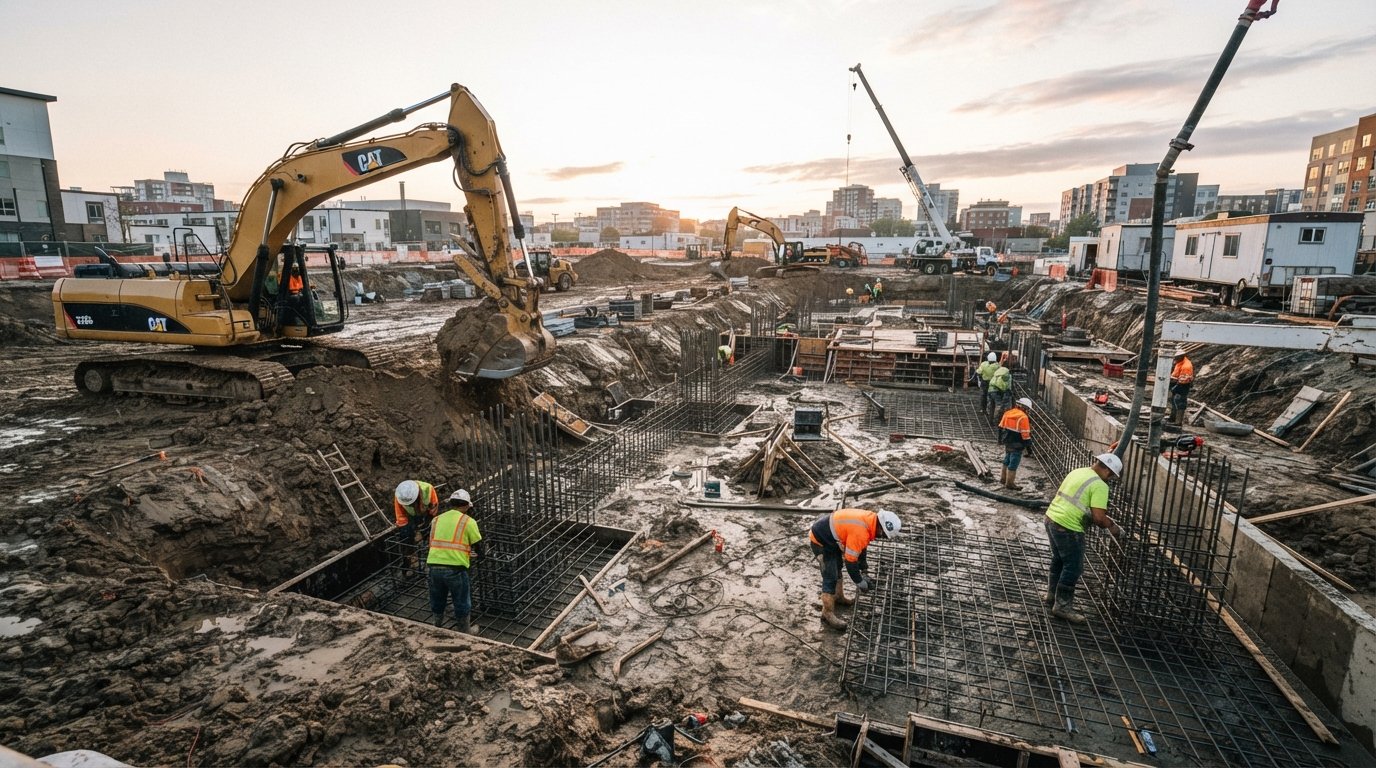
Every successful building begins with the right order of work, making construction sequencing explained an essential topic for anyone involved in construction and infrastructure development. Even the best architectural designs and engineering plans can fail when construction activities happen in the wrong sequence. Poor sequencing often leads to project delays, rework, equipment downtime, safety risks, material waste, and rising construction costs.
The National Institute of Building Sciences (NIBS) emphasizes that effective project planning and sequencing are fundamental to improving construction quality, safety, productivity, and overall project performance throughout the building lifecycle. Proper construction sequencing helps project teams coordinate activities efficiently, reduce risks, and deliver projects on schedule while maintaining high engineering standards.
A construction project usually starts with excitement and ambitious timelines, yet progress can quickly slow when one activity interrupts another or critical tasks begin before prerequisite work is completed. Contractors may face scheduling conflicts, subcontractors can remain idle while waiting for access, and procurement delays may disrupt the entire workflow. Small planning mistakes often create expensive chain reactions that affect budgets, quality, and client confidence. Careful sequencing helps every team understand what needs to happen, when it should happen, and how each stage connects to the next.
This guide provides construction sequencing explaination in simple terms, covering the major stages of construction, work breakdown, activity dependencies, scheduling techniques, risk management, and best practices for efficient project delivery. You will also discover how we at Dutum Group combines engineering expertise, project management excellence, and structured construction planning to execute complex commercial, industrial, institutional, and infrastructure projects across Nigeria with greater efficiency, safety, and long-term value.
Also See: 12 Tips for Effective Construction Site Management
What Is Construction Sequencing?
Construction sequencing is the process of arranging construction activities in the correct order so a project can be completed safely, efficiently, and on time. It ensures that every task starts only after the work it depends on has been completed. A clear sequence helps contractors, engineers, architects, and subcontractors work together without unnecessary delays or conflicts.
Good construction sequencing reduces rework, improves communication, and supports better use of labour, equipment, and materials. It also makes it easier to monitor progress and respond to unexpected changes during construction.
Why Construction Sequencing Matters in Every Project
Proper sequencing helps projects stay organised from start to finish. It supports better coordination between different trades and reduces interruptions on site.
Some of the key benefits include:
- Improves project productivity.
- Reduces delays caused by poor coordination.
- Minimises rework and unnecessary costs.
- Enhances worker safety through planned activities.
- Supports better quality control and inspection planning.
- Helps deliver projects within the planned schedule.
Large public projects in Nigeria may also require construction activities to follow procurement procedures under the Public Procurement Act 2007, while building works should comply with the National Building Code and other applicable regulations.
Also See: How to Calculate Construction Materials
Key Stages of Construction Sequencing
#1. Pre-Construction Planning and Site Preparation
Construction sequencing begins long before physical work starts. This stage focuses on preparing the project for successful execution.
Activities often include:
- Reviewing drawings and specifications.
- Conducting site investigations.
- Obtaining permits and approvals.
- Developing the construction sequence plan.
- Preparing site access and temporary facilities.
Early planning helps identify possible risks before construction begins, making later phases easier to manage.
#2. Foundation and Structural Works
Once the site is ready, construction moves to foundation and structural activities. These elements provide the strength and stability needed for the rest of the building.
This stage commonly includes:
- Excavation.
- Foundation construction.
- Concrete works.
- Structural framing.
- Floor and roof structures.
Each activity depends on the successful completion and inspection of the previous one.
#3. Building Services and Interior Finishes
After the main structure is complete, specialist contractors begin installing essential building systems.
Typical activities include:
- Mechanical installations.
- Electrical systems.
- Plumbing works.
- Fire protection systems.
- Interior walls and ceilings.
- Flooring, painting, and fixtures.
Proper coordination during this stage helps prevent clashes between different contractors working in the same areas.
#4. Testing, Commissioning, and Project Handover
The final stage ensures every building system performs as intended before the project is delivered to the client.
This phase generally includes:
- Quality inspections.
- System testing and commissioning.
- Safety verification.
- Defect corrections.
- Final documentation.
- Client handover.
Successful handover confirms that the project meets design specifications, safety requirements, and contractual obligations.
Also See: How to Construct a Drainage System
How to Create an Effective Construction Sequence Plan
A construction sequence plan provides clear guidance for every team involved in the project. It defines the order of work while helping project managers coordinate people, equipment, and materials efficiently.
#1. Define the Project Scope
The first step is understanding exactly what needs to be built. A clearly defined scope identifies the project’s objectives, deliverables, and construction requirements.
Project teams should determine:
- Major construction activities.
- Site constraints.
- Required permits.
- Safety requirements.
- Client expectations.
A well-defined scope reduces uncertainty before work begins.
#2. Identify Task Dependencies
Every construction activity depends on another task being completed first. Identifying these relationships creates a realistic workflow.
For example:
| Activity | Depends On |
| Foundation | Site preparation |
| Structural frame | Completed foundation |
| Roofing | Structural frame |
| Interior finishes | MEP installations |
| Final inspection | Completion of all works |
Understanding these dependencies reduces conflicts and improves project coordination.
#3. Allocate Resources and Timelines
Construction sequencing also involves assigning the right resources at the right time.
This includes:
- Labour teams.
- Construction equipment.
- Building materials.
- Specialist subcontractors.
- Inspection schedules.
Proper resource planning reduces idle time and keeps work progressing efficiently.
#4. Review and Update the Sequence Throughout the Project
Construction projects rarely remain unchanged from start to finish. Weather conditions, design revisions, material availability, and site challenges may require adjustments.
Regular progress meetings allow project teams to:
- Monitor completed activities.
- Resolve emerging issues.
- Update timelines.
- Coordinate upcoming work.
- Improve communication among stakeholders.
Projects that regularly review their sequence plans are often better prepared to manage unexpected changes.
Essential Tools Used for Construction Sequencing
#1. Building Information Modelling (BIM)
Building Information Modelling (BIM) creates a digital representation of a building before construction begins. Teams can visualise construction activities, detect design conflicts, and improve coordination between different disciplines.
BIM supports:
- Better design collaboration.
- Clash detection.
- Construction visualisation.
- Improved project coordination.
- More accurate planning.
The National Building Code encourages better planning and coordination throughout the construction process, making BIM an increasingly valuable solution for complex projects.
#2. Gantt Charts and Critical Path Method (CPM)
Gantt charts display project activities along a timeline, making it easier to monitor progress.
The Critical Path Method (CPM) identifies activities that directly affect the project completion date.
Together, these tools help project managers:
- Schedule work logically.
- Monitor milestones.
- Track project progress.
- Reduce scheduling conflicts.
- Identify activities that require close attention.
#3. Project Management Software
Construction management software allows teams to coordinate projects from a central platform.
Common features include:
- Task management.
- Resource allocation.
- Document sharing.
- Progress reporting.
- Budget monitoring.
- Team communication.
Using digital platforms improves collaboration between project stakeholders and provides better visibility throughout construction.
#4. Work Breakdown Structure (WBS)
A Work Breakdown Structure (WBS) divides a project into smaller, manageable sections. Instead of treating the project as one large task, teams organise work into phases, activities, and deliverables.
A WBS helps teams:
- Define project scope.
- Assign responsibilities.
- Improve planning accuracy.
- Monitor progress more effectively.
- Support efficient construction sequencing.
For complex developments, combining a WBS with BIM, Gantt charts, and regular project reviews creates a stronger foundation for successful project delivery. Experienced contractors like us at Dutum Group use structured planning and coordinated project management approaches to keep large-scale developments organised from pre-construction through final handover.
Construction Sequencing vs Construction Scheduling
People often use construction sequencing and construction scheduling interchangeably, but they serve different purposes. Construction sequencing determines the logical order in which work should be completed, while construction scheduling assigns dates, durations, and resources to that sequence.
A project should have a clear construction sequence before a detailed schedule is created. This approach helps project teams build realistic timelines and avoid unnecessary delays during execution.
| Feature | Construction Sequencing | Construction Scheduling |
| Primary Focus | Order of construction activities | Timing of construction activities |
| Main Purpose | Define task dependencies | Assign dates and durations |
| Output | Logical workflow | Project timeline |
| Resource Planning | Basic coordination | Detailed allocation of labour, equipment, and materials |
| Best Used | Early planning | Project execution and monitoring |
Both processes work together to improve project delivery. Construction sequencing creates the workflow, while scheduling converts that workflow into an achievable timeline.
Common Challenges in Construction Sequencing
#1. Managing Task Dependencies
Many construction activities depend on previous tasks being completed correctly. A delay in one activity can affect several others if dependencies are not properly managed.
Common examples include:
- Delayed foundation work affecting structural construction.
- Incomplete inspections delaying follow-up activities.
- Design revisions changing the order of work.
Clear coordination between project teams helps reduce these disruptions.
#2. Material and Equipment Delays
Construction cannot progress as planned if essential materials or equipment are unavailable when needed.
Common causes include:
- Late material deliveries.
- Equipment breakdowns.
- Supply chain disruptions.
- Procurement delays.
Planning procurement early and maintaining reliable supplier relationships help reduce these risks.
#3. Labour and Resource Constraints
Skilled workers, specialist subcontractors, and construction equipment must be available at the right time. Resource shortages can slow project progress even when other activities are ready to proceed.
Effective resource planning should consider:
- Workforce availability.
- Equipment scheduling.
- Trade coordination.
- Material availability.
Balancing resources across different project stages improves productivity.
#4. Changes in Project Scope
Client requests, design updates, or unforeseen site conditions can change the original construction sequence.
Examples include:
- Additional building features.
- Design modifications.
- Unexpected ground conditions.
- Regulatory changes.
Regular reviews of the construction sequence plan help project teams adjust efficiently while reducing the impact on cost and timelines.
Best Practices for Successful Construction Sequencing
Successful construction sequencing requires continuous planning, collaboration, and monitoring throughout the project lifecycle. Following proven practices helps improve coordination and reduce costly disruptions.
#1. Plan Early and Collaborate Across Teams
Early planning creates a stronger foundation for project success. Project managers, architects, engineers, consultants, and subcontractors should work together during the planning stage to identify dependencies and potential risks.
Early collaboration helps:
- Improve constructability.
- Identify sequencing risks.
- Reduce coordination issues.
- Support informed decision-making.
Shared planning also improves communication between everyone involved in the project.
#2. Monitor Progress and Update the Sequence
Construction sequencing should remain flexible as work progresses. Site conditions, weather, material availability, and design changes may require adjustments.
Regular progress reviews allow project teams to:
- Track completed activities.
- Identify emerging delays.
- Update project priorities.
- Coordinate upcoming work.
- Improve overall project control.
Using digital project management tools can make these updates faster and more accurate.
#3. Prioritise Safety, Quality, and Communication
Safety and quality should be considered during every stage of construction sequencing. Clear communication also helps ensure that everyone understands the current project status and upcoming activities.
Good practices include:
- Holding regular coordination meetings.
- Following approved inspection procedures.
- Maintaining updated construction documents.
- Reporting site issues promptly.
- Reviewing safety requirements before major activities begin.
Strong communication reduces misunderstandings and supports efficient project delivery.
Why Clients Choose Dutum Group for Well-Planned Construction Delivery
Comprehensive Pre-Construction Planning
We begin every project with detailed planning, including design reviews, risk assessments, resource planning, and construction sequencing. This approach helps identify potential challenges early and supports smoother project execution.
Strong Project Coordination and Risk Management
Our team coordinates architects, engineers, subcontractors, suppliers, and clients throughout every project phase. Continuous monitoring and proactive risk management help minimise delays, improve communication, and keep construction activities aligned with project objectives.
Proven Experience Delivering Complex Projects Across Nigeria
We have successfully delivered residential, commercial, healthcare, educational, industrial, and infrastructure projects across Nigeria. This broad experience enables the company to manage complex construction sequences while maintaining quality, safety, and timely project delivery.
Frequently Asked Questions
Construction sequencing defines the logical order of work, while construction scheduling assigns dates, durations, and resources to those activities.
Common tools include Building Information Modelling (BIM), Gantt charts, the Critical Path Method (CPM), Work Breakdown Structures (WBS), and construction project management software.
BIM helps project teams visualise construction activities, identify design clashes, improve coordination, and plan work more accurately before construction begins.
Construction sequencing is usually managed by the project manager or main contractor, working closely with architects, engineers, consultants, subcontractors, and other project stakeholders.
Construction projects should comply with the Public Procurement Act 2007 where applicable, the National Building Code, relevant health and safety requirements, and guidelines issued by regulatory authorities such as the Bureau of Public Procurement (BPP).
Leave a Reply