

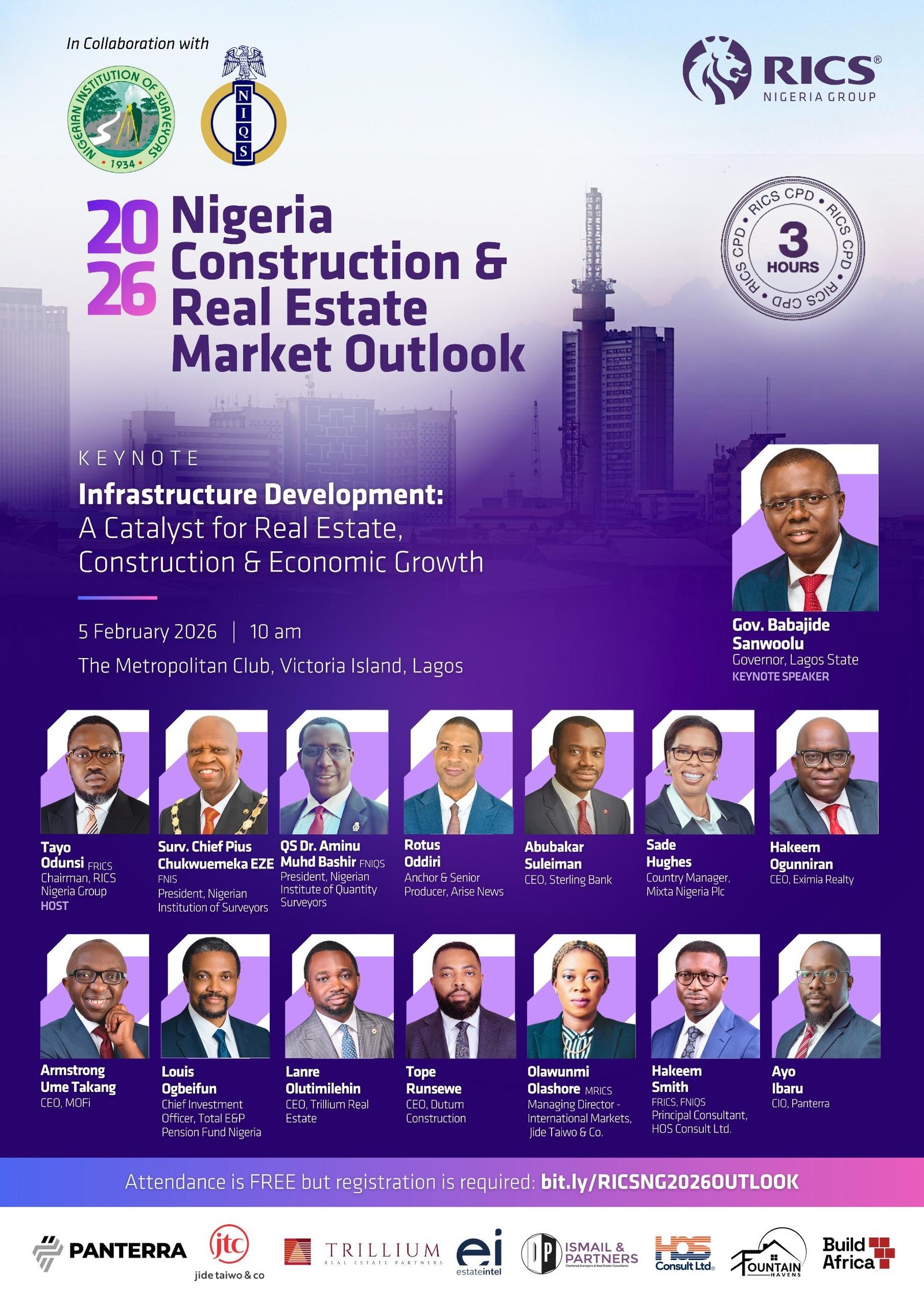
Nigeria Real Estate and Construction Outlook 2026 unfolded at a time when uncertainty has become the industry’s most expensive material. Inflation has remained elevated in recent years, while exchange rate volatility continues to pressure imported inputs and financing structures, according to data from the National Bureau of Statistics and the Central Bank of Nigeria. Across the sector, developers are navigating rising material costs, shifting regulatory timelines, infrastructure gaps, and funding constraints. Consequently, projects that once failed because of poor execution are now failing because of unpredictability. In this climate, designing for stability is no longer optional; it is strategic, and at Dutum, we build that stability into every project we deliver.
Across boardrooms and project sites, the strain is visible. Budget overruns emerge from late design changes. Delivery timelines stretch as procurement systems chase the lowest price instead of the best value. Cash flow pressures collide with foreign exchange exposure. Infrastructure such as roads, drainage, and power often lags behind completed buildings, eroding asset value before occupancy even begins. Fragmented planning between stakeholders further amplifies risk. As a result, confidence weakens, capital slows, and long-term planning becomes reactive rather than deliberate.
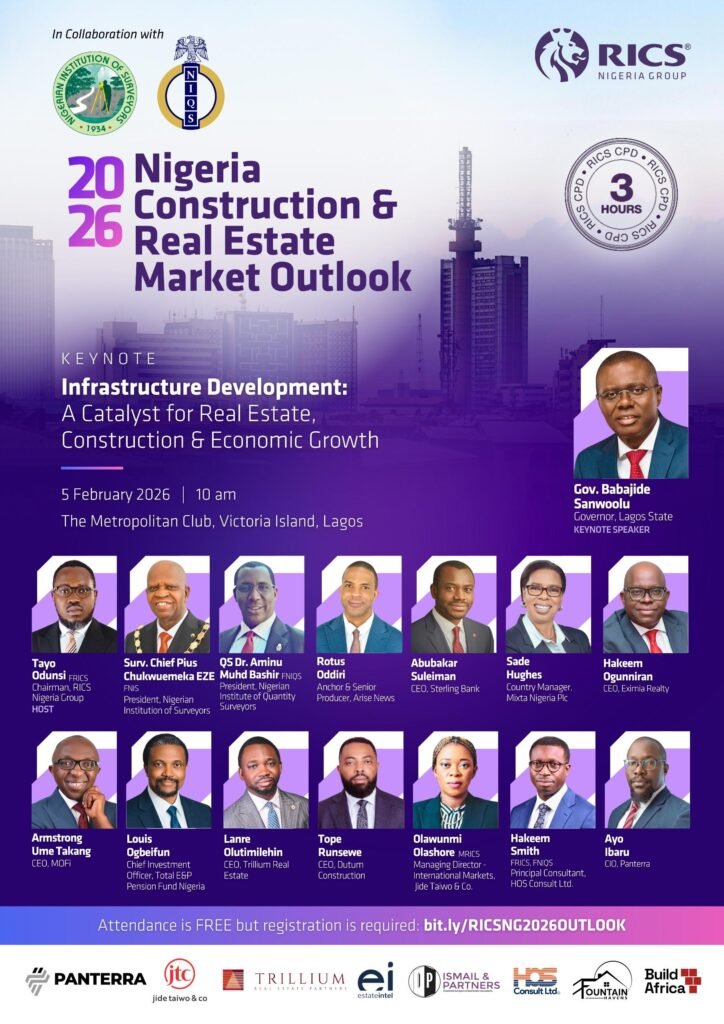
At the recently concluded Nigeria Real Estate and Construction Outlook 2026, Mr. Temitope Runsewe, CEO of Dutum Construction, reframed this reality. His perspective moves beyond cost-cutting toward risk design, early certainty, disciplined procurement, and integrated collaboration. This page captures that strategic blueprint and demonstrates how we at Dutum position ourselves as the solution: a disciplined, future-focused, systems-thinking construction partner built to deliver predictability in volatile markets.
Volatility as a Design Input
In Nigeria, volatility is not an occasional challenge; it is a constant feature of the construction landscape. Inflation, foreign exchange swings, and regulatory changes frequently reshape project costs and timelines. According to the Central Bank of Nigeria, the naira has experienced periods of sharp devaluation against the dollar, directly affecting the cost of imported construction materials. Developers who treat volatility as an external shock often struggle to stay on budget, while those who embed it into their project design gain a critical advantage.
Mr. Temitope Runsewe, CEO of Dutum Construction, emphasizes that successful projects are those designed to absorb uncertainty from the start. Late-stage design changes are a common culprit behind cost escalation and quality compromise. For example, switching building specifications midway often increases procurement costs, disrupts construction sequences, and undermines project timelines. Similarly, delays in decision-making can lead to rushed fixes, rework, or the use of lower-quality materials. As Mr. Runsewe notes, “Quality rarely fails because money is short; it fails because decisions are delayed.” This insight shifts the focus from reactive problem-solving to proactive risk design, ensuring that every stage of a project anticipates possible economic and operational volatility.
Rethinking Budget Protection in Volatile Markets
Protecting budgets in unpredictable markets requires deliberate strategies rather than last-minute cost-cutting. Dutum Construction applies a disciplined, systems-thinking approach that emphasizes early cost certainty, design clarity, smart local sourcing, and phased procurement.
- Early Cost Certainty: Locking in design intent, specifications, and construction methodology at the start reduces exposure to changes that drive overruns. Late alterations often lead to cascading cost increases and schedule delays.
- Design Clarity: Clear, well-communicated designs prevent ambiguity during construction, reducing the risk of mistakes that compromise quality and inflate budgets.
- Local Material Strategy: Substituting imported materials with high-performing local alternatives mitigates foreign exchange exposure. This approach ensures performance standards are maintained while lowering systemic risks in a volatile currency environment.
- Phased Procurement: Aligning procurement schedules with cash inflows rather than rigid timelines reduces financial pressure and allows the project to respond flexibly to market swings.
| Strategy | Benefit | Mr. Temitope Runsewe |
| Early Cost Certainty | Minimizes budget overruns | “Late-stage design changes are the single biggest driver of budget overruns and quality compromise.” |
| Local Material Strategy | Reduces FX exposure, supports local industry | “Quality is protected by specification discipline, not brand obsession.” |
| Phased Procurement | Aligns cash flow with project needs, limits financing pressure | “Procurement is sequenced to match project cash inflows rather than rigid timelines.” |
Through embedding volatility into project design, Dutum Construction transforms uncertainty from a threat into a manageable input. This strategic mindset, championed by Mr. Temitope Runsewe, ensures projects remain on budget, on time, and uncompromised in quality, even in Nigeria’s most unpredictable markets.
Time and Cost Are One System
“Time overruns are cost overruns wearing a disguise,” says Mr. Temitope Runsewe. In Nigeria, delays on construction sites often disguise the true financial impact, creating a ripple effect that inflates budgets and frustrates investors. Most projects still operate under fragmented planning models, where design, procurement, and construction phases work in isolation. Lowest-price procurement, while appearing cost-effective upfront, often results in higher long-term expenses due to delays, rework, and quality compromise.
We approach this challenge differently. At Dutum, we treat time and cost as one system. Method-based costing ensures that pricing reflects how a project is built, not just what is built. By planning parallel workflows, such as structural works running alongside service installation and finishing packages, we reduce idle time and accelerate delivery. Real-time cost-to-complete tracking allows our teams to identify overspending or delays early, enabling corrective action before costs spiral. Early involvement of contractors also improves buildability, efficiency, and decision-making, reducing surprises during execution.
| Approach | Benefit | Mr. Temitope Runsewe |
| Method-Based Costing | Aligns construction methodology with cost certainty | “Construction methodology directly determines cost certainty and speed.” |
| Parallel Workflows | Shortens timelines, reduces idle resources | “Projects move faster and cheaper when workflows run concurrently.” |
| Real-Time Cost Tracking | Early detection of overruns | “We track projected final cost continuously, enabling early corrective action.” |
| Early Contractor Involvement | Improves efficiency and buildability | “Contractors contribute to cost efficiency before designs are frozen.” |
By integrating time and cost as a single system, Dutum Construction transforms unpredictability into certainty, delivering projects on time and on budget in Nigeria’s volatile construction market.
The Future is Collaboration, Not Cheapness
In Nigeria, the construction industry often equates success with cost reduction. Mr. Temitope Runsewe challenges this notion, emphasizing that predictability and collaboration are far more valuable than mere cheapness. Low-cost approaches frequently shift foreign exchange, regulatory, and delivery risks entirely onto contractors, eroding quality and trust.
We believe success comes from fair risk sharing, infrastructure synchronization, and shared data transparency, which strengthens investor confidence and ensures project resilience.
| Strategic Shift | Impact | Mr. Tope Runsewe |
| Fair Risk Sharing | Reduces contractor exposure to volatile costs | “Contracts must sensibly allocate risks instead of concentrating them on a single party.” |
| Infrastructure Synchronization | Minimizes post-construction delays | “Infrastructure must be delivered in parallel with developments rather than after occupancy.” |
| Shared Data Transparency | Boosts investor confidence and capital flow | “Reliable data reduces speculation and improves project outcomes.” |
Under Mr. Runsewe’s leadership, Dutum Construction positions itself as a systems-thinking partner, ensuring projects are not only delivered on time and on budget but also resilient, transparent, and aligned with Nigeria’s evolving real estate and construction landscape.
Leave a Reply