

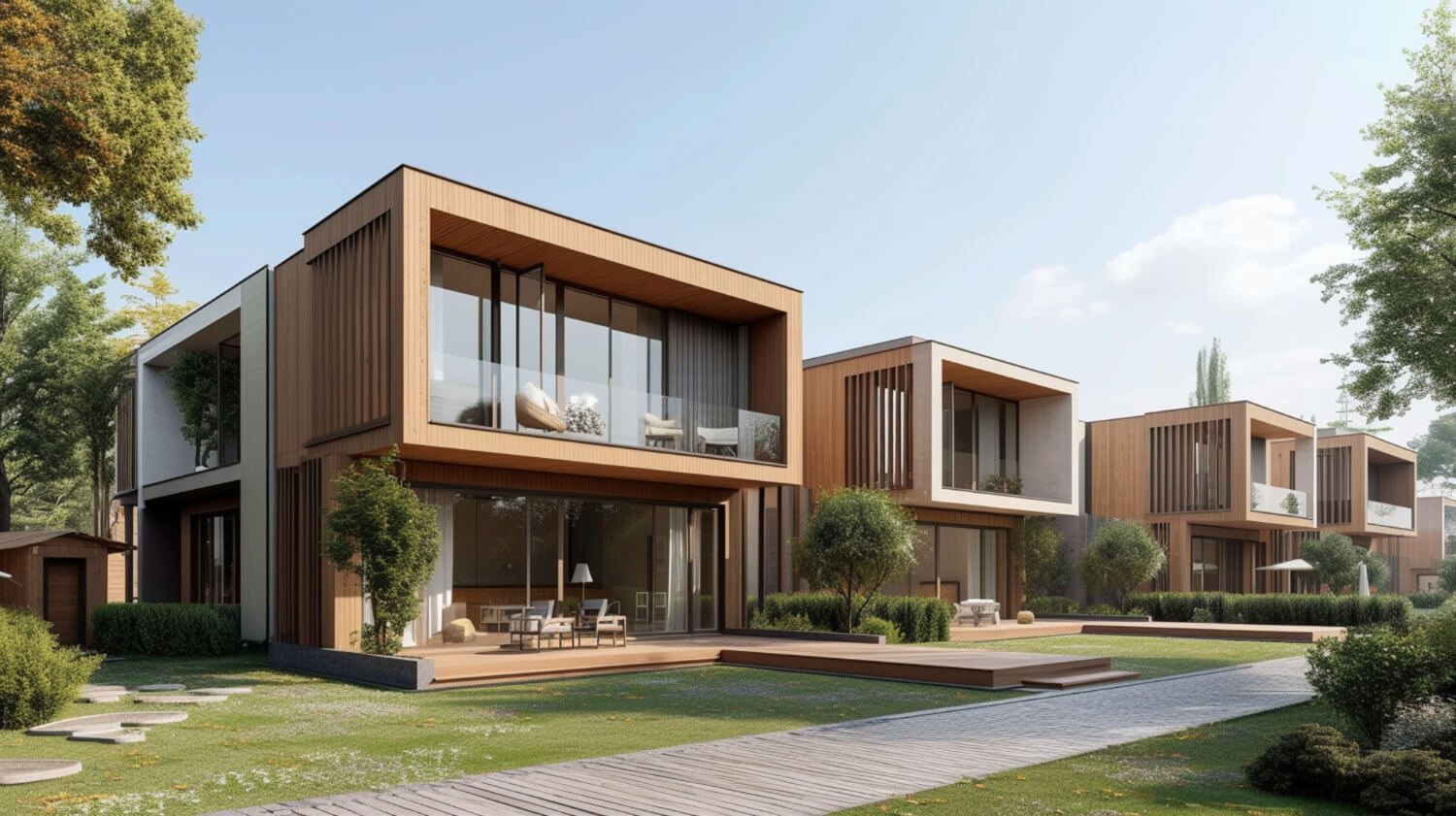
That glass-walled modern duplex from Pinterest would turn your Lagos home into an oven—but you’re not stuck with the dated designs dominating Nigerian estates.
You want contemporary aesthetics but don’t know which international design elements actually work in Nigeria’s climate. You own a standard 15m x 30m or 18m x 30m plot, but can’t tell which designs physically fit after setbacks.
You have a rough ₦200M budget but no transparency on what drives cost variation. This guide solves the translation problem: modern design categories adapted for Nigeria, plot-specific layouts, transparent cost breakdowns, and professional verification steps protecting you from fraud.
Three Modern Duplex Styles That Work in Nigeria
Minimalist Contemporary looks sleek through clean lines, simple geometric forms, and neutral palettes (whites, grays, earth tones). Deep overhangs provide shade while creating shadow lines defining the style. Textured finishes using local materials avoid a generic concrete-block appearance while hidden ventilation strategies maintain clean exteriors. Construction costs ₦600,000 per sqm. This suits professionals wanting sleek contemporary aesthetics, popular in Lekki, Ikoyi, and Guzape developments.
Tropical Modern embraces the Nigerian climate rather than fighting it. Visible roof overhangs become architectural features. Covered outdoor spaces extend the living area beyond air-conditioned interiors. Natural ventilation is celebrated through strategically placed openings. Materials that age well in humidity (stone, treated wood accents) combine with modern finishes. Construction costs ₦650,000-₦800,000 per sqm. This works for families wanting modern design connected to the Nigerian environment, effective in estates with mature landscaping.
Afro-Contemporary Fusion uses contemporary forms with subtle African design references—modern interpretations of traditional architecture’s climate intelligence. Thick walls providing thermal mass, strategic openings creating cross-ventilation, and courtyard concepts expressed through contemporary design language. Earth-tone palettes reflecting the Nigerian landscape combine with clean modern lines and local art integration. Construction costs ₦1,000,000-₦1,200,000 per sqm. This appeals to homeowners wanting modern homes reflecting African identity, particularly impressive for diaspora Nigerians building “back home.”
Dutum Group specializes in these climate-appropriate modern styles—designing duplexes that look contemporary while functioning reliably in Nigerian conditions.
What Fits Your Plot: Modern Duplexes by Land Size
Beautiful designs online rarely specify land requirements. After Physical Planning Authority setbacks (typically 3m front/rear, 1.5m sides), here’s what modern duplexes require for each standard plot size.
15m x 30m Plots (450sqm total)
After setbacks, the actual building footprint is roughly 150-180sqm per floor, creating 300-360sqm total built area. A typical 4-bedroom duplex layout: ground floor with one guest bedroom ensuite, living/dining/kitchen, guest toilet; first floor with three bedrooms (master ensuite, two sharing bathroom) and family lounge.
Compact planning means every square meter counts. Staircase placement becomes critical. Limited external space means generator, water tanks, and parking require creative integration. Total project cost ranges ₦180M-₦216M for minimalist contemporary (300-360sqm at ₦600,000/sqm), including construction, approvals, and external works.
18m x 30m Plots (540sqm total)
After setbacks, approximately 200-240sqm per floor creates 400-480sqm total built area. A typical 5-bedroom duplex: ground floor with 1-2 guest bedrooms, living/dining, kitchen, utility room, guest toilet; first floor with 3-4 bedrooms including master suite, family lounge, possibly a study.
This is the sweet spot for Nigerian middle-to-upper-income families. Adequate space without massive land costs. Better separation of formal/informal areas than 15m x 30m plots. Staff quarters are feasible without compromising the main house. Parking for 2-3 vehicles fits comfortably.
Total project cost ranges ₦240M-₦288M for minimalist contemporary (400-480sqm at ₦600,000/sqm), including construction, approvals, and external works. All three modern styles work well on this dimension—the most flexible plot size for modern duplex design.
30m x 30m Plots (900sqm total)
After setbacks, approximately 300-400sqm per floor creates 600-800sqm total built area. A typical 6-7 bedroom duplex: ground floor with 2 guest bedrooms, expansive living areas, formal dining, family/informal dining, large kitchen with separate pantry/laundry, guest toilet; first floor with 4-5 bedrooms including large master suite with sitting area, study, family lounge.
This allows sprawling modern duplexes in premium Lekki Phase 1, Guzape, GRA developments. Separate entertainment from family areas. Staff quarters easily accommodated. Mature landscaping possible. Multiple parking spaces.
Total project cost ranges ₦360M-₦480M for minimalist contemporary (600-800sqm at ₦600,000/sqm), or ₦600M-₦960M for luxury Afro-contemporary fusion (600-800sqm at ₦1,000,000-₦1,200,000/sqm). Afro-contemporary fusion becomes particularly impressive at this scale due to the space for courtyards and landscape integration.
Dutum Group specializes in optimizing standard Nigerian plots—especially 15m x 30m and 18m x 30m dimensions, which most architects overlook.
What Modern Duplex Construction Actually Costs
Two ₦240M quotes for “the same design” often reflect completely different quality across structure, finishes, and services.
Costs break into categories: Structure (foundation, columns, beams, slabs) consumes 30-35%. Envelope (walls, roofing, windows) takes 20-25%. Finishes (flooring, painting, joinery, fixtures) account for 25-30%. Services (plumbing, electrical) require 10-15%. External Works (compound, drainage, fencing) need 10-15%. This breakdown shows where cost-quality trade-offs are safe versus dangerous.
Minimalist Contemporary: ₦600,000 per sqm
Clean contemporary aesthetics with proper structural integrity, strategic windows maximizing ventilation, deep overhangs providing shade while creating modern shadow lines, and locally available materials throughout. Quality ceramic tiles, custom aluminum windows, solid kitchen cabinets, and durable paint systems. Adequate water storage (10,000L overhead plus underground tanks), generator house, standard electrical/plumbing.
For 400sqm duplex: ₦240M construction plus ₦15M-₦20M approvals/externals = ₦255M-₦260M total. This suits professionals wanting authentic modern design functioning reliably in the Nigerian climate without excessive luxury, delivering contemporary aesthetics at the most accessible modern duplex price point.
Tropical Modern: ₦650,000-₦800,000 per sqm
Everything in Minimalist Contemporary, plus elaborate roof overhang designs as architectural features, extensive covered outdoor spaces, premium natural ventilation systems, and materials selected for tropical aging (stone, weather-resistant wood). Enhanced water storage (15,000L+), solar panel structural provisions, upgraded generator systems, and CCTV rough-ins.
For 400sqm duplex: ₦260M-₦320M construction plus ₦18M-₦25M approvals/externals = ₦278M-₦345M total. This suits families wanting modern design actively celebrating a tropical environment with superior climate-responsive features.
Luxury Afro-Contemporary Fusion: ₦1,000,000-₦1,200,000 per sqm
Premium finishes throughout, custom architectural elements referencing African design heritage, stone cladding, bespoke millwork, high-end imported fixtures, sophisticated lighting. Comprehensive solar systems, whole-house backup, water treatment plants, advanced security integration, smart home provisions.
For 400sqm duplex: ₦400M-₦480M construction plus ₦25M-₦35M approvals/externals = ₦425M-₦515M total. This suits high-net-worth individuals building distinctive homes in premium locations (Banana Island, Maitama, Old Ikoyi) where design makes a statement about cultural identity.
Other factors: Site conditions matter—marshy soil requiring specialized approaches adds ₦10M-₦25M. Location affects material transport costs. Architectural complexity (curved walls, intricate roofs) increases costs by 15-25%. Building during the rainy season slows progress and inflates expenses. Never cheap out on structure to afford luxury finishes—structural work must meet engineering standards regardless of budget.
Dutum Group provides detailed cost breakdowns across these categories before you commit.
Space Planning for Nigerian Family Life
Nigerian culture requires regular entertaining while maintaining family privacy. Single open-plan layouts fail this requirement. The solution places formal living/dining near the entrance for entertaining (can be closed off). Separate family living space deeper in the home for daily use. Kitchen accesses both zones without compromising privacy. The guest bedroom with an ensuite on the ground floor accommodates elderly parents needing accessibility or visiting relatives. Generous entry areas allow shoe removal (cultural norm). Multiple sitting areas at different formality levels prevent awkward overlap.
Many Nigerian households include elderly parents, adult children living at home longer, or a rotating extended family. A ground-floor bedroom suite provides elderly parent accessibility. Bedrooms sized to evolve—children’s rooms now become offices/guest rooms later. The master suite needs a separate sitting/prayer space. Multiple bathrooms reduce morning congestion.
Many households employ domestic staff (cook, driver, nanny). Staff quarters need a discrete placement with a separate entrance, staff bathroom, and kitchenette, positioned for security (sight lines to gate) and functional kitchen access without walking through family spaces. Infrastructure integration: underground water tanks invisible from exterior, overhead tanks integrated into roof structure, generator houses positioned to minimize bedroom noise while accessible for maintenance, solar panel mounting integrated into roof design, and drainage integrated into landscaping.
How to Verify Your Architect Won’t Scam You
The fear of losing life savings to fraudsters often paralyzes prospects more than any other concern.
Check Professional Registration: ARCON (Architects Registration Council of Nigeria) for architects and COREN (Council for the Regulation of Engineering in Nigeria) for engineers aren’t optional—they’re legal requirements. Visit arcon.gov.ng and coren.gov.ng. Look up the professional’s registration number. Verify registration is current, not expired or suspended. Red flags: “My registration is being renewed,” refusal to provide registration number, claiming “not necessary for residential projects.”
Inspect Completed Projects: Portfolio photos look impressive, but tell you nothing about structural integrity or if the professional delivered on time and on budget. Request addresses of 2-3 completed duplex projects you can physically visit. Get the homeowner’s contact information to ask about their experience. Look for: Does the completed house match the portfolio images? How does quality look 2-3 years later? Ask homeowners: Timeline and budget adherence? Responsive to post-completion issues? Red flags: Refusal to provide access (claiming “client confidentiality”), only showing projects under construction, and all completed projects are less than 6 months old.
Verify Plot-Specific Competence: Ask directly: “Have you designed modern duplexes for [your plot size] in [your location] that received Physical Planning approval on first submission?” Designing for standard plots while meeting local setback requirements requires specific experience. Good answers reference specific projects on similar plots in your area, state setback requirements without looking up, and explain optimization strategies. Red flags: Vague “we work with any plot size,” inability to state local setback requirements, suggestions about “adjusting regulations with facilitation” (bribes, leaving you vulnerable to future demolition).
Payment Structure: Professional architects charge 5-8% of the estimated construction cost, paid across milestones: preliminary designs, detailed drawings, approvals secured, and construction supervision. Red flags: Requests for 50%+ upfront before drawings commence, reluctance to document services in a written contract, vague scope.
The Building Approval Process
Physical Planning requires architectural drawings (site plan, floor plans, elevations, sections), structural engineering drawings (foundation plans, structural calculations), surveyed land documents proving ownership, and soil test reports (required in some jurisdictions). Lagos State Physical Planning Permit typically takes 6-12 weeks if properly documented. FCT Development Control follows similar timeframes. Delays occur when drawings don’t meet requirements.
Common rejection reasons: Setback violations showing buildings too close to boundaries—most residential areas require 3m front, 3m rear, 1.5m sides (varies). Density violations where building coverage exceeds the allowed percentage (typically 40-60% maximum). Height restrictions limit residential buildings to two floors or specific heights. Rejected applications cost you: revised drawings (architect charges for revisions), new submission fees, timeline delays, and pushing construction start deeper into the rainy season.
Competent professionals preparing compliant drawings eliminate approval problems. Bribes to bypass safety requirements leave you vulnerable—the government periodically demolishes illegal structures. The safe path pays professionals properly to do it right the first time.
Dutum Group handles the complete approval process—preparing compliant drawings that pass Physical Planning review without rejections.
Dutum Group: Modern Design for Nigerian Reality
Prospects want contemporary aesthetics, but international designs don’t translate tothe Nigerian climate. Dutum combines modern duplex designs with contemporary visual language and tropical climate intelligence. Deep overhangs provide shade while creating distinctive shadow lines. Strategic window placement maximizes ventilation while avoiding heat gain. Locally available materials throughout ensure repairs don’t require imports.
Prospects own standard 15m x 30m or 18m x 30m plots, but can’t find modern designs that fit. Dutum specializes in optimizing standard Nigerian plot dimensions, creating modern duplexes specifically engineered for plots Nigerians actually own.
With no cost transparency and many unable to fund complete construction upfront, Dutum provides detailed cost breakdowns across structure, finishes, services, and externals—helping clients understand what drives cost variation. For budget-constrained clients, technical phased construction planning: Phase 1 completes structure to roofing with all rough-ins (weatherproof shell), Phase 2 adds essential finishes (immediately habitable), Phase 3 completes luxury finishes when funds are available.
Dutum offers unified architectural design, structural engineering, and project management under a single contract. One accountability point throughout. Material procurement guidance ensuring quality supplies at competitive prices. COREN and ARCON registrations you can verify independently. Physical inspection of completed projects before engagement.
Schedule a consultation with Dutum Group to discuss your specific plot dimensions, budget, and design preferences—or request addresses of completed projects you can inspect before committing.
Conclusion
Modern duplex design in Nigeria translates contemporary aesthetics to tropical climate, standard plot sizes, and realistic budgets. The framework covers which design styles work here, what fits your plot after setbacks, transparent costs across quality tiers, space planning for Nigerian families, and professional verification protecting you from fraud.
Rent inflation and material cost escalation make delays expensive, but starting without planning knowledge costs more. Your modern duplex should look distinctively contemporary, function reliably in Nigerian conditions, and fit the plot and budget you actually have. Schedule a design consultation with Dutum Group to discuss your plot, budget, and vision—request completed project addresses for inspection before deciding.
Leave a Reply