

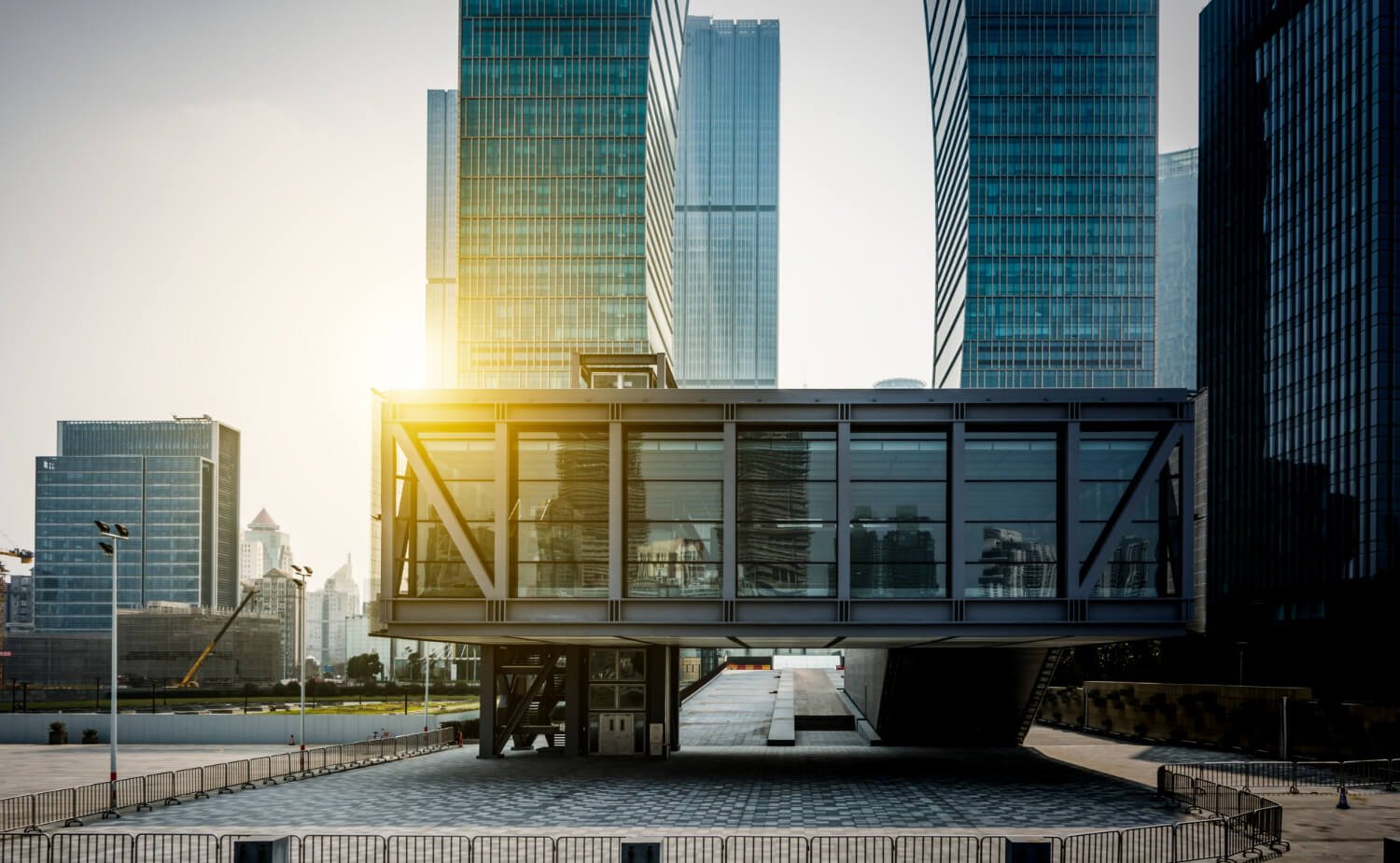
Building design is not a single concept. It is a critical intersection where function meets physics, and aesthetics meet strict regulatory codes. Whether you are a developer planning a high-rise in Lagos or a government body commissioning a new bridge, assuming “design” is just about how a structure looks is a costly mistake.
You need clarity before you break ground. A mismatch between your design typology and your construction reality can lead to stalled projects, budget overruns, or compliance failures. A comprehensive building plan is essential to navigate these complexities.
This guide breaks down the three primary ways buildings are classified: by Purpose (Typology), by Style (Aesthetics), and by Construction Classification (Code).
At Dutum Group, we don’t just interpret these designs; we execute them. As a full-service Engineering, Procurement, and Construction (EPC) provider, we bridge the gap between conceptual drawings and functional reality. From the Admiralty Mall to the Art Hotel, we have spent over 30 years translating complex designs into tangible assets.
The 3 Major Types of Building Design and Construction
1. Design by Purpose (Building Typology)
The most practical way to classify a building is by its intended use. This determines the structural load, safety requirements, and mechanical systems needed. Understanding the differences between residential and commercial construction is vital for investors to gauge scope and cost.
Residential Design
This category focuses on comfort, privacy, and community integration. It ranges from single-family units to massive high-rise developments.
- The Focus: Livability, sound insulation, and efficient layouts.
- The Dutum Angle: We handle large-scale residential developments that require strict quality control across hundreds of units. For example, our work on the Purple Lekki mixed-use development and the Imeh Towers in Banana Island demonstrates our ability to deliver high-end residential structures that meet the exact specifications of demanding real estate investors. We ensure the structural integrity of every unit, whether it’s a private estate or a multi-story apartment block.
Commercial Design
Commercial buildings prioritize functionality, branding, and high traffic capacity. Examples include office towers, retail centers, and banks.
- The Focus: Flexible floor plans, robust HVAC systems for climate control, and adherence to commercial safety codes for high footfall.
- The Dutum Angle: Modern commercial spaces require complex systems integration. Our construction of the Admiralty Mall in Lekki showcases our capacity to build sophisticated retail environments that balance aesthetic appeal with the durability needed for heavy public use.
Industrial Design
These structures are driven by operational efficiency and scale. They include factories, warehouses, and distribution centers.
- The Focus: Large clear-span structures (minimizing columns), heavy-duty flooring for machinery, and specialized loading docks.
- The Dutum Angle: We specialize in the heavy-duty construction required for logistics and manufacturing. Our work on the Dominion Air Hangar proves our capability to erect large-span steel structures that must perform under rigorous operational demands.
Institutional and Public Design
Designed for community service, these buildings often require specialized engineering. They include hospitals, schools, and government secretariats.
- The Focus: Stringent compliance, public safety features, and specialized systems (e.g., medical gas lines in hospitals).
- The Dutum Angle: We bring the necessary rigour to sensitive public projects. We are currently handling the construction of the National Secretariat for the Nigerian Medical Association (NMA), a project that demands precise adherence to institutional standards and long-term durability.
Civil and Infrastructure Design
This category covers non-building structures vital to society, such as roads, bridges, and drainage systems.
- The Focus: Load-bearing capacity, environmental durability, and civil engineering precision.
- The Dutum Angle: Civil engineering is a core division of Dutum Group. We design and construct critical infrastructure, such as the Ogbomosho-Oko-Ilogbo-Osogbo Road and various bridge projects. We understand that infrastructure is the backbone of development, often preceding vertical construction.
2. Design by Architectural Style (Aesthetics)
While purpose dictates function, style dictates the “soul” of the building.
Modern and Contemporary Design
This style is defined by minimalism, open-plan spaces, and the use of industrial materials like glass, steel, and concrete.
- Key Challenge for Construction: Achieving clean lines and precise tolerances. In modern design, there is no molding to hide a crooked joint. The Art Hotel project is a prime example of our ability to execute sophisticated, modern designs with complex finishing requirements.
Classical and Traditional Design
This style relies on symmetry, ornamentation, and historical precedents (columns, pediments, stone cladding).
- Key Challenge for Construction: Sourcing specialized materials and finding skilled craftsmen. It requires a supply chain capable of procuring bespoke stone or moldings and installers who understand traditional techniques.
Sustainable (Green) Design
This is less about “look” and more about performance. It focuses on energy efficiency, minimal environmental impact, and passive cooling.
- Key Challenge for Construction: Integrating sophisticated systems like solar power, greywater recycling, and efficient thermal envelopes. Dutum prioritizes environmentally conscious construction, striving to maximize energy efficiency in projects like Purple Lekki, which incorporates sustainability into its core design.
3. Design by Construction Type (Code and Safety)
This is the technical classification that determines a building’s allowable height and size based on fire resistance.
- Type I (Fire-Resistive): The highest level of safety, typically required for skyscrapers and high-rise apartments. It mandates the use of concrete and protected steel structural members that can withstand fire for several hours.
- Type II (Non-Combustible): Similar to Type I but with slightly lower fire-resistance ratings. Common in modern low-rise commercial buildings (malls, offices) utilizing metal or concrete frames.
- Type III (Ordinary): Features non-combustible exterior walls (like brick) but allows combustible interior elements (like wood framing). Often seen in older masonry buildings or lower-rise mixed-use structures.
- Type IV (Heavy Timber): Uses thick, solid, or laminated wood members. These large timbers are slow to burn, offering inherent fire resistance.
- Type V (Wood-Framed): The least fire-resistive type, common in small residential homes. Type V-B, for instance, has no fire rating requirement for structural elements.
Choosing a Design is Choosing a Partner
Once you have selected your design typology, style, and understood the code requirements, your project’s success hinges on one decision: your Execution Partner.
Design is theory; construction is reality. Dutum Group bridges that gap.
1. EPC Integration
We don’t just build; we provide Engineering, Procurement, and Construction. This single-source approach eliminates the traditional disconnect between the designer and the builder. We validate the design before construction begins, ensuring that what is drawn can actually be built within budget.
2. Code Compliance & Risk Management
Whether it is a Type I high-rise or a specialized institutional facility, our deep technical expertise ensures your project meets all local and international building codes. We manage the regulatory risk so you don’t have to.
3. Scalability & Expertise
From heavy civil engineering for new road networks to precise construction for luxury estates like Green Pastures, Dutum Group has the proven resources and project history to deliver. We own our equipment and manage our supply chains, preventing the delays that plague lesser contractors.
Ready to Translate Your Design Vision into a Built Reality?
Don’t let your design remain on paper. You need a partner who understands the intricacies of typology, style, and code—and has the muscle to execute them.Contact Dutum Group today
Leave a Reply